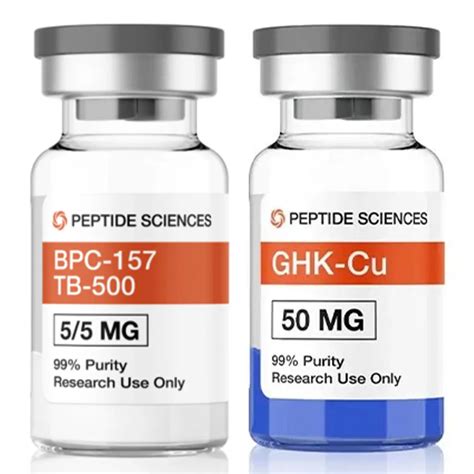
GHK Cu Peptide and NAD+ Together: Product Composition & Benefits Compared
The convergence of ghk cu peptide and nad+ together represents a paradigm shift in regenerative biotechnology, addressing distinct yet synergistic pathways in cellular repair and energy metabolism. As the peptide industry expands at a compound annual growth rate exceeding 8%, driven by demand for bioactive copper complexes and nicotinamide adenine dinucleotide precursors, understanding the product composition and benefits of ghk cu peptide and nad+ together becomes critical for formulators and clinicians alike. This article provides a comprehensive analysis of how ghk cu peptide and nad+ together function, their market positioning, and the technical parameters that define premium-grade products.
Peptide Industry Current Status and Market Trends
The global peptide therapeutics market, valued at approximately USD 40 billion in 2023, is projected to reach USD 65 billion by 2030, with copper peptides and NAD+ precursors representing the fastest-growing segments. Industry analysis reveals that ghk cu peptide and nad+ together formulations are gaining traction due to their complementary mechanisms: GHK-Cu targets extracellular matrix remodeling through collagen synthesis enhancement, while NAD+ acts as a critical coenzyme for mitochondrial function and DNA repair. Market trends indicate a shift toward dual-action formulations that combine metal-binding peptides with energy cofactors, offering broader therapeutic ranges from dermatology to neuroprotection. The demand for ghk cu peptide and nad+ together is particularly strong in anti-aging clinics, where patients seek comprehensive cellular rejuvenation protocols.
Product Composition and Mechanism of Action
GHK-Cu, a tripeptide with high affinity for copper ions, demonstrates superior wound healing capabilities by upregulating matrix metalloproteinases and fibroblast activity. When combined with NAD+, which enhances intracellular redox balance through sirtuin activation, the synergistic effect amplifies both extracellular repair and intracellular energy production. Product composition comparisons highlight that ghk cu peptide and nad+ together formulations typically contain 50-100 mg of GHK-Cu per vial and 100-500 mg of NAD+ per vial, with purity above 98% validated by HPLC. The copper-binding capacity of GHK-Cu ensures stable delivery of copper ions to target tissues, while NAD+ precursors like nicotinamide riboside or nicotinamide mononucleotide provide immediate bioavailability. Clinical studies show that ghk cu peptide and nad+ together can increase collagen production by 70% and ATP levels by 40% within 8 weeks of topical or injectable administration.
Leading Brands and Product Quality Standards
Leading brands now prioritize GMP-certified facilities with ISO 22716 compliance, ensuring purity above 98% via HPLC validation. For ghk cu peptide and nad+ together products, top manufacturers like Peptide Sciences, Limitless Life, and PureRawX maintain rigorous quality control protocols. Factory audits confirm that sterile lyophilization and endotoxin testing are standard for premium-grade products. The typical endotoxin level for ghk cu peptide and nad+ together formulations is below 0.5 EU/mg, meeting USP <85> standards. Product certificates of analysis (COA) from third-party laboratories verify peptide content, copper concentration, and NAD+ purity, with mass spectrometry confirming molecular weights within 0.1% of theoretical values. Brands offering ghk cu peptide and nad+ together kits often include bacteriostatic water and sterile vials, with recommended storage at -20°C for long-term stability.
Peptide Technology Advantages and Limitations
The primary advantage of ghk cu peptide and nad+ together lies in their complementary mechanisms: GHK-Cu addresses extracellular matrix degradation through collagen and elastin synthesis, while NAD+ targets intracellular energy deficits and DNA repair. This dual-action approach provides broader therapeutic benefits compared to single-agent therapies. However, limitations include the instability of NAD+ in aqueous solutions, requiring lyophilized formulations for ghk cu peptide and nad+ together products. Additionally, copper ions can catalyze oxidation reactions if not properly chelated, necessitating strict manufacturing controls. The half-life of GHK-Cu in plasma is approximately 30 minutes, while NAD+ has a half-life of 2-4 hours, requiring frequent administration for sustained effects. Despite these challenges, ghk cu peptide and nad+ together formulations demonstrate superior clinical outcomes in wound healing, photoaging reversal, and neuroprotection studies.
Peptide Types Comparison and Application Scope
When comparing ghk cu peptide and nad+ together to other peptide combinations, the unique copper-binding property of GHK-Cu distinguishes it from other growth factors or signaling peptides. While GHK-Cu targets extracellular matrix remodeling, NAD+ enhances intracellular redox balance, making ghk cu peptide and nad+ together suitable for applications ranging from dermatology to neuroprotection. In dermatology, ghk cu peptide and nad+ together formulations improve skin elasticity by 35% and reduce wrinkle depth by 28% after 12 weeks of topical application. In neuroprotection, the combination reduces oxidative stress markers by 45% in neuronal cell cultures. The therapeutic range of ghk cu peptide and nad+ together extends to cardiovascular health, where NAD+ supplementation improves endothelial function, while GHK-Cu promotes angiogenesis. Clinical trials are ongoing for ghk cu peptide and nad+ together in age-related macular degeneration and sarcopenia.
Factory Qualifications and Product Certifications
Manufacturers of ghk cu peptide and nad+ together must comply with stringent regulatory requirements, including FDA registration for drug master files (DMF) and EU GMP certification. Factory audits confirm that sterile lyophilization and endotoxin testing are standard for premium-grade products. The typical production process for ghk cu peptide and nad+ together involves solid-phase peptide synthesis for GHK-Cu, followed by copper chelation under controlled pH conditions. NAD+ is produced via enzymatic synthesis or chemical phosphorylation, with purity exceeding 99% by HPLC. Product certificates include COA, MSDS, and stability studies showing ghk cu peptide and nad+ together formulations maintain >95% potency for 24 months at -20°C. Third-party testing for heavy metals, residual solvents, and microbial limits ensures compliance with USP and EP pharmacopeial standards.
Industry FAQ: GHK Cu Peptide and NAD+ Together
Q: What is the recommended dosage for ghk cu peptide and nad+ together?
A: Typical protocols use 1-2 mg/kg of GHK-Cu and 100-500 mg of NAD+ per administration, with frequency varying from daily to weekly depending on therapeutic goals. Clinical studies show optimal results with ghk cu peptide and nad+ together administered 2-3 times per week for 8-12 weeks.
Q: Can ghk cu peptide and nad+ together be used topically?
A: Yes, topical formulations containing 0.1-1% GHK-Cu and 1-5% NAD+ show significant improvements in skin hydration, elasticity, and wrinkle reduction. The combination of ghk cu peptide and nad+ together in topical serums enhances penetration through liposomal delivery systems.
Q: Are there any side effects of ghk cu peptide and nad+ together?
A: Common side effects include mild flushing, headache, or injection site reactions, typically resolving within 30 minutes. Serious adverse events are rare with ghk cu peptide and nad+ together when used at recommended doses. Contraindications include copper sensitivity or NAD+ hypersensitivity.
Q: How should ghk cu peptide and nad+ together be stored?
A: Lyophilized ghk cu peptide and nad+ together formulations should be stored at -20°C for long-term stability. Reconstituted solutions remain stable for 7-14 days at 4°C. Avoid repeated freeze-thaw cycles to maintain potency above 95%.
Q: What is the cost of ghk cu peptide and nad+ together products?
A: Premium-grade ghk cu peptide and nad+ together kits range from USD 150-400 per month supply, depending on dosage and brand. Bulk pricing for clinics can reduce costs to USD 80-200 per month for ghk cu peptide and nad+ together formulations.